Choosing the right bridal hairstyle for face shape is one of the most important style decisions you will make before your wedding day. The right style does not just follow a trend; it works with your natural bone structure to bring out your best features in every photo. Many brides focus on hair texture or length, but the most flattering choice almost always comes down to matching your bridal hairstyle to your face shape rather than picking a style straight from a magazine. In this guide, we walk through how to identify your face shape and choose a hairstyle that feels effortless, elegant, and completely you.
At Chicago Bridal Artists stylists, we help brides every week translate their inspiration photos into a hairstyle that actually suits their unique features rather than someone else’s face shape. Understanding your face shape first makes every other decision, from parting to volume placement, much easier to get right.
Why Face Shape Matters for Bridal Hair
Every face shape reflects light differently, and hairstyles interact with your jawline, forehead, and cheekbones in specific ways. A style that looks stunning on a heart-shaped face might overwhelm someone with a rounder profile. This is why matching your hairstyle to your face shape is not about limiting your options; it is about making sure your natural features look balanced under wedding lighting and in photographs taken from every angle.
Your hairstylist should also consider your wedding veil, headpiece, and neckline, but face shape remains the foundation every other choice builds on. Getting this first step right saves time during your trial and helps you arrive at your wedding morning appointment with a clear, confident plan.
How to Identify Your Face Shape
Before choosing a style, take a moment to figure out which face shape best describes you. Most brides fall into one of six general categories, though many faces are a blend of two. If you are unsure, our team offers personalized styling consultations to help pinpoint your shape and the most flattering options before your trial.
The Six Common Face Shapes
- Oval: balanced proportions, considered the most versatile shape
- Round: fuller cheeks, softer angles, similar width and height
- Square: strong jawline, broad forehead, angular features
- Heart: wider forehead, narrower chin, higher cheekbones
- Long or oblong: face length greater than width, longer forehead
- Diamond: narrow forehead and chin, wide cheekbones
If you fall between two shapes, choose the style recommendations that address your most prominent feature, whether that is your jawline, forehead width, or cheekbone placement.
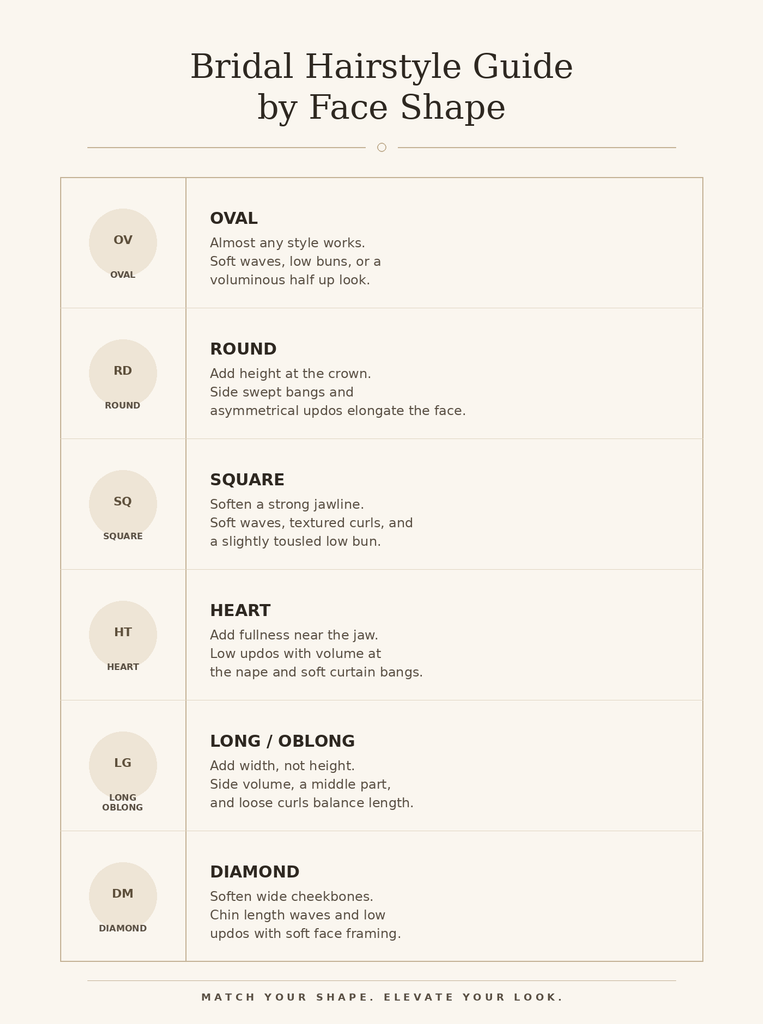
Best Wedding Hairstyle by Face Shape
Once you know your face shape, choosing a bridal hairstyle for face shape becomes much simpler. Below are the styles that tend to work best for each shape, along with a few options to bring to your trial appointment.
Oval Face Shape
Oval faces are naturally balanced, which means almost every bridal hairstyle works well. Soft waves, sleek low buns, and voluminous half-up styles all complement the proportions of an oval face without any adjustment needed.
Because oval face shapes rarely need correcting, you have the freedom to choose a style based on your dress neckline and personal style instead. A classic chignon looks elegant with a fitted gown, while loose romantic curls suit a flowing bohemian silhouette. If you’re looking for professional bridal hair services, a stylist can help refine the look based on your overall bridal vision.
Round Face Shape
Round face shapes benefit from styles that add height and length, which helps elongate the overall look. Height at the crown, whether through a voluminous updo or a half-up style with lift, works especially well.
Avoid pulling hair back too tightly at the same height all around, since this can emphasize width rather than balance it. Side-swept bangs, face-framing pieces, and asymmetrical updos also help create the illusion of a more oval silhouette.
Square Face Shape
Square face shapes have a strong, defined jawline, so the goal is to soften the angles rather than mirror them with sharp, blunt lines. Soft waves, textured curls, and side-parted styles work beautifully to balance a square jaw.
A low, slightly tousled bun with loose face-framing strands softens strong bone structure, while a sleek, geometric updo can look too severe for this shape. Rounded silhouettes around the face tend to be the most flattering choice.
Heart-Shaped Face
Heart-shaped faces have a wider forehead and cheekbones with a narrower chin, so styles that add fullness near the jawline help create balance. Side-swept fringe or soft curtain bangs also help minimize forehead width.
Low updos with volume at the nape, textured waves, and styles that draw a little more attention downward all work well. Avoid pulling all the hair straight back with no volume, since this can draw extra focus to the width of the forehead.
Long or Oblong Face Shape
Long or oblong face shapes benefit from styles that add width rather than height, which helps balance the overall length of the face. Soft waves with volume at the sides, rather than the crown, create a more proportioned look.
A middle part paired with loose curls, or a low updo with fullness around the ears, works especially well. Avoid very high, sleek updos that pull hair tightly upward, since this can make the face appear even longer.
Diamond Face Shape
Diamond face shapes have narrow foreheads and chins with wider, more prominent cheekbones. The goal is to add width near the forehead and chin while softening the cheekbone area. Soft side-swept bangs or a textured fringe help balance a narrow forehead.
Chin-length waves, low updos with soft pieces framing the face, and styles with volume near the jaw all help create a more balanced silhouette. Sleek, fully pulled back styles tend to be less flattering for this face shape since they emphasize the cheekbones even more.
Every bride’s face is slightly unique, and small adjustments during your trial session help fine-tune the final result. No matter which face shape you identify with, the goal is always the same: a hairstyle that highlights your best features and photographs beautifully in natural light from every single angle throughout the day. You can browse real examples of these styles across many different face shapes in our bridal updo portfolio for extra inspiration before your trial appointment.
Bridal Updo Guide: General Styling Tips
Beyond face shape, a few general principles apply to almost every bride when planning wedding hair.
Consider Your Hair Length and Texture
Hair length and natural texture affect which styles are realistic for your wedding day. A stylist can often adapt a look to work with shorter hair or add texture to fine, straight strands, but starting with a style suited to your natural hair type makes the process smoother.
Think About Your Veil and Headpiece
If you plan to wear a veil or headpiece, mention this during your trial so your stylist can build the hairstyle around it. Placement changes depending on whether hair is up, down, or half up, and this detail is much easier to plan than to adjust last minute.
Factor In Your Venue and Weather
Outdoor summer weddings call for styles that hold up well in heat and humidity, while indoor winter weddings offer more flexibility. Updos generally hold their shape longer through a full day of celebration compared to loose, down styles.
Hairstyle Recommendations by Face Type for Different Wedding Themes
Your wedding style also plays a role in choosing the right look, alongside your face shape.
Classic and Traditional Weddings
Sleek low buns, classic chignons, and smooth half-up styles pair beautifully with traditional gowns and formal venues. These styles work well across most face shapes with minor adjustments to volume and part placement.
Bohemian and Outdoor Weddings
Loose waves, braided details, and textured low updos suit relaxed, outdoor settings. These styles are especially flattering for round and diamond face shapes, since the soft texture naturally adds gentle width where needed.
Modern and Minimalist Weddings
Sleek ponytails, sculptural updos, and clean side parts complement simple, modern gowns. Oval and heart-shaped faces tend to carry these more structured styles particularly well.
Common Mistakes to Avoid When Choosing Bridal Hair
A few missteps come up often when brides are planning their wedding hair, and avoiding them can save time and stress later.
- Choosing a style purely from a photo without considering your own face shape or hair texture
- Skipping a trial session before the wedding day
- Not accounting for a veil, headpiece, or hair accessories during the trial
- Ignoring how the style will hold up through several hours of a reception
- Waiting too long to book your hairstylist during a busy wedding season
Avoiding these common mistakes helps ensure your wedding morning goes smoothly and your hairstyle photographs exactly as you imagined.
Why a Trial Session Matters
A trial session is the best opportunity to see how a style actually looks on you before committing to it for your wedding day. Photos and inspiration boards are a helpful starting point, but they cannot replace seeing the finished result in person under real lighting.
During a trial, your stylist can also test how the style holds up over several hours, make small adjustments based on your face shape, and confirm how the look pairs with your veil or headpiece. Booking a trial with enough time before the wedding gives you room to make changes without any pressure.
How Chicago Bridal Artists Helps You Choose
At Chicago Bridal Artists, every consultation starts with a conversation about your face shape, hair type, and wedding vision before any styling begins. Our team has worked with a wide range of face shapes and hair textures, which means recommendations are based on real experience rather than guesswork.
We also walk brides through how a chosen style will photograph, move throughout the day, and pair with accessories like veils or headpieces. This approach helps take the guesswork out of one of the most personal decisions of your wedding planning process.
Final Thoughts on Choosing Bridal Hair by Face Shape
Your bridal hairstyle should feel like an extension of you, not a trend borrowed from someone with completely different features. Taking the time to understand your face shape, whether oval, round, square, heart, long, or diamond, gives you a clear starting point for a look that feels effortless and photographs beautifully.
From there, your wedding theme, hair texture, and accessories help refine the details. If you would like guidance choosing the right style for your face shape, you can connect with our styling team, and we will help you plan a look you will love from every angle.
Frequently Asked Questions
1. How do I know my face shape for choosing a bridal hairstyle?
Pull your hair back and look at your reflection in a mirror, paying attention to the width of your forehead, cheekbones, and jawline along with your overall face length. Comparing these proportions usually points clearly toward one of the six common face shapes.
2. What is the most universally flattering bridal hairstyle?
Soft, textured updos with some face-framing pieces tend to flatter the widest range of face shapes, since they add balance without being too severe in any direction.
3. Should I choose my hairstyle before or after my dress?
Many brides find it easier to choose their dress first, since the neckline and overall silhouette help narrow down which hairstyles will look most balanced together.
4. Can a hairstylist adjust a style if it does not suit my face shape?
Yes, small adjustments to volume, part placement, and face-framing pieces can often make a style work better for your specific face shape, which is one of the main reasons a trial session is so valuable.
5. Do round face shapes need to avoid updos completely?
No, round face shapes can absolutely wear updos, but styles with height at the crown and some face-framing pieces tend to be more flattering than very tight, low styles.
6. How far in advance should I schedule a bridal hair trial?
Most brides schedule their trial two to three months before the wedding, which allows enough time to make adjustments without feeling rushed.
7. What hairstyles work best for a square face shape?
Soft waves, side-parted styles, and slightly tousled low buns help soften a strong jawline, while very sleek or geometric styles tend to emphasize sharp angles.
8. Will my hairstyle change if I wear a veil?
Veil placement often affects how a style is built, particularly around the crown and back of the head, so it is important to bring your veil to your trial session.
9. Are there hairstyles that work for every face shape?
Soft, textured half-up styles are close to universally flattering, since they add gentle volume and framing without overwhelming any particular feature.
10. Can I still get the hairstyle I want if it does not match my face shape recommendations?
Yes, face shape guidance is meant to inform your decision, not limit it. A skilled stylist can often modify your desired look with small adjustments so it still works beautifully with your features.